

Article: The Inflammation Epidemic
The Inflammation Epidemic
This Could Be What Your Skin is Dealing with Right Now
Lately, I hear the same story again and again.
“My skin suddenly feels sensitive.”
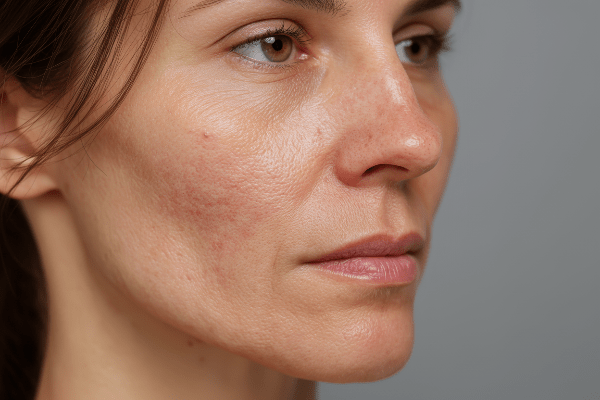
“I’m noticing redness in my cheeks.”
“My skin is so dry. I can’t get enough moisture.”
“I feel dry and breaking out at the same time.”
“I look older overnight.”
The crazy thing is….these are actually not isolated concerns. They are different expressions of the same biological pattern: chronic inflammation combined with barrier disruption.
Inflammation is not necessarily harmful. In its acute form, it is protective and essential for healing. The issue is persistent, low grade inflammation that does not fully resolve. Research increasingly recognizes chronic inflammation as a key contributor to accelerated skin aging because it promotes oxidative stress, stimulates collagen degrading enzymes, and impairs normal repair processes.¹
When inflammation becomes the background state of the skin, resilience declines. The surface becomes reactive. Recovery slows. Pigmentation lingers. Texture roughens. What many women interpret as “aging” is often dysregulated skin physiology.
What Inflammation Actually Does to the Skin
The skin barrier is a living, adaptive structure. It regulates water loss, defends against irritants and microbes, and helps maintain immune balance. When this barrier is disrupted, transepidermal water loss (TEWL) increases and inflammatory signaling rises.²
Barrier compromise does not present in just one way. It can appear as:
- Persistent pinkness or flushing
- Tightness after cleansing
- Rough or sandpaper texture
- Dehydration alongside congestion
- Eczema around the eyes or mouth
- Increased sensitivity to products
Scientific literature consistently shows that when the intercellular lipid matrix is disturbed, TEWL rises and the skin becomes more vulnerable to irritation and inflammation.² This is why I almost always begin by reinforcing the barrier first before doing anything else.
When that infrastructure is weakened, everything feels harder to manage.
The Hormonal Shift No One Warned You About
For women in perimenopause and menopause, inflammation often intensifies.
Estrogen influences the skin’s natural ability to produce new cells, produce collagen, hydration, vascularization, immune responses, and wound healing.³ When estrogen declines, skin becomes thinner, drier, less elastic, and less efficient at repairing itself. Collagen loss accelerates significantly during the first five years after menopause.³ At the same time, antioxidant defenses weaken and the skin becomes more susceptible to oxidative stress.⁴
Stress and the Skin Are Biologically Linked
The skin is deeply connected to the nervous system. When you’re under emotional stress, your body releases stress hormones like cortisol. Those hormones can weaken the skin barrier and slow down the skin’s ability to repair itself.⁵
Clinical research demonstrates that psychological stress can increase transepidermal water loss and compromise barrier integrity.⁵ Chronic stress also amplifies inflammatory cytokine activity and slows wound healing.
This is why stressed skin often looks dull, reactive, and less resilient.
When the nervous system is chronically activated, the skin behaves differently.
How Modern Skincare Can Add to the Problem
One of the most common patterns I see is cumulative irritation.
Not one harsh product, but too many stimulating inputs layered together.
Daily acids.
Retinoids.
Enzymes.
Mechanical exfoliation.
Cleansers with high pH.
Devices that increase surface turnover without adequate recovery.
Research on cleansing science confirms that alkaline soaps can disrupt the acid mantle, swell the stratum corneum, destabilize barrier lipids, and increase dryness and irritation over time.⁶,⁷
The natural pH of the skin surface is mildly acidic, generally between 4.5 and 5.5. Cleansing systems formulated closer to physiological pH are significantly less disruptive than traditional alkaline soaps.⁷
Exfoliation itself is not inherently harmful. But when renewal exceeds recovery capacity, inflammation follows.
The skin functions best when it feels supported, not overstimulated.
Chronic inflammation is directly linked to premature skin aging.
Chronic low grade inflammation contributes to oxidative stress and collagen degradation, accelerating visible signs of aging.¹,⁴
But here is the good news.
Inflammatory skin can look shiny yet fragile. It can wrinkle more easily because it is dehydrated and lipid deficient. It can pigment more readily because inflammatory signaling stimulates melanocyte activity.
In many cases, what appears to be rapid aging is barrier compromise and inflammatory load.
When inflammation is reduced and the barrier is restored, the skin often regains luminosity, smoothness, and elasticity more efficiently than expected.
What Actually Calms Inflammatory Skin
When skin feels reactive, the solution is rarely more stimulation.
It is intelligent support.
In my experience, the most effective shift often comes from subtraction, not addition. Removing cumulative irritation allows the skin to redirect its energy toward repair.
We know from barrier research that recovery improves when transepidermal water loss is reduced and lipid balance is restored.²,⁸ When the intercellular lipid matrix is supported, the skin regains resilience. Gentle, pH appropriate cleansing paired with replenishing lipids and humectants has been shown to reduce surfactant related damage and strengthen barrier function over time.⁶
From a physiological standpoint, inflammatory skin responds best to:
- Thoughtful exfoliation rather than frequent exfoliation
- Cleansing that respects the skin’s natural pH
- Lipid rich formulations that reinforce the stratum corneum
- High quality antioxidants to buffer oxidative stress
- Practices that calm the nervous system and reduce stress signaling
For hormonally shifting skin, this foundation becomes even more essential.³ When collagen support, lipid production, and antioxidant defenses are already declining, overstimulation accelerates imbalance. Support restores it.
When we begin to understand that many skin concerns are rooted in inflammation, the conversation changes. It becomes less about chasing redness, dryness, breakouts, or lines individually and more about restoring stability to the skin as a whole. In my experience, the skin rarely needs more force or more stimulation. It needs consistency, protection, and intelligent nourishment. When we reinforce the barrier, reduce unnecessary irritation, and support the skin’s natural repair processes, it responds. The skin is intelligent. It attempts to repair itself continuously. Our role is not to override it, but to create the conditions in which that repair can occur efficiently.
Calm skin functions differently.
Supported skin recovers differently.
When inflammation is reduced, radiance follows.
References
-
Hussein RS et al. Influences on Skin and Intrinsic Aging: Biological, Environmental, and Therapeutic Insights. Skin Res Technol. 2024.
-
Del Rosso JQ. Repair and Maintenance of the Epidermal Barrier. J Clin Aesthet Dermatol. 2011.
-
Thornton MJ. Estrogens and Aging Skin. Dermatoendocrinol. 2013.
-
Papaccio F et al. Oxidative Stress in Skin Aging. Antioxidants. 2022.
-
Choe SJ et al. Psychological Stress Deteriorates Skin Barrier Function. Sci Rep. 2018.
-
Ananthapadmanabhan KP et al. Cleansing Without Compromise. Dermatol Ther. 2004.
-
Mijaljica D et al. Soaps and Syndets: Skin Cleansing Without Compromise. Skin Pharmacol Physiol. 2022.
-
Elias PM. Epidermal Barrier Function: Pathogenesis and Therapy. J Clin Invest. 2005.